

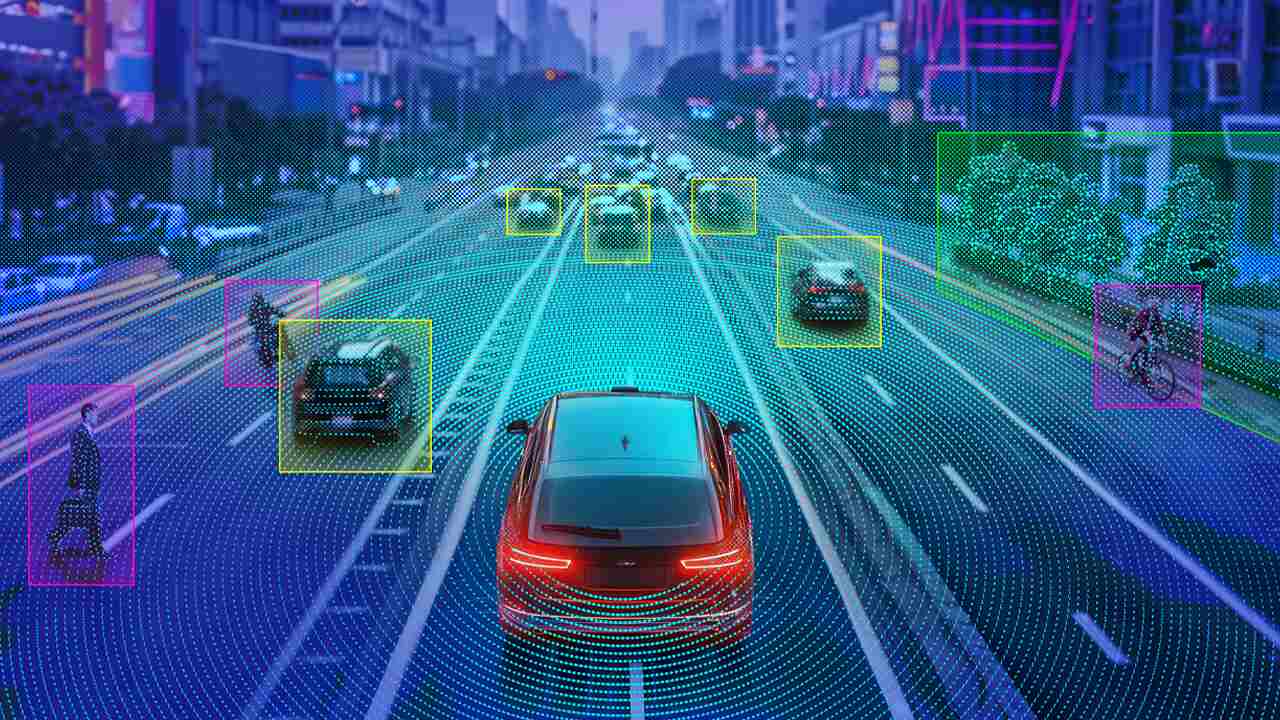
Autonomous driving technology—often called self-driving or driverless technology—is rapidly transforming the global transportation landscape. Advances in artificial intelligence, machine learning, sensors, and connectivity are enabling vehicles to operate with minimal or no human intervention.
While fully autonomous vehicles are still developing, the technologies behind them are already reshaping how people move, how goods are delivered, and how cities design their infrastructure.
Understanding this shift helps reveal why autonomous driving is considered one of the most disruptive innovations in modern mobility.
What Is Autonomous Driving Technology?
Autonomous driving refers to vehicles capable of sensing their environment, making decisions, and navigating without human input.
Self-driving systems rely on a combination of technologies working together:
- Cameras that capture visual information from the road
- LiDAR sensors that create 3D maps of the environment
- Radar systems that detect objects and measure distance
- Artificial Intelligence (AI) that interprets data and makes driving decisions
- High-precision GPS and mapping systems
These components allow a vehicle to detect obstacles, identify traffic signs, monitor surrounding traffic, and determine the safest driving path.
Levels of Autonomous Driving
Not all autonomous vehicles operate the same way. The industry defines six levels of vehicle automation, from fully manual to fully autonomous.
Level 0 – No Automation
The human driver performs all driving tasks.
Level 1 – Driver Assistance
Basic assistance such as adaptive cruise control or lane-keeping.
Level 2 – Partial Automation
The vehicle controls steering and acceleration, but the driver must stay attentive.
Level 3 – Conditional Automation
The car can manage driving in certain conditions but may require human takeover.
Level 4 – High Automation
The vehicle operates autonomously in specific environments, such as urban areas.
Level 5 – Full Automation
No steering wheel or driver required—the vehicle handles everything.
Most commercially available vehicles today fall between Level 2 and Level 3.
Key Technologies Powering Self-Driving Cars
Several technological breakthroughs make autonomous transportation possible.
Artificial Intelligence and Machine Learning
AI enables vehicles to interpret complex driving scenarios such as pedestrians crossing, changing traffic lights, or unexpected obstacles.
Machine learning systems continuously improve by analyzing millions of driving situations.
Sensor Fusion
Autonomous vehicles combine multiple sensors to gain a complete understanding of their surroundings.
This process, known as sensor fusion, merges information from cameras, LiDAR, radar, and ultrasonic sensors.
High-Definition Mapping
Self-driving cars rely on extremely detailed digital maps that include:
- Lane markings
- Traffic signals
- Road curvature
- Speed limits
These maps allow vehicles to anticipate road conditions before encountering them.
Vehicle-to-Everything (V2X) Communication
V2X technology enables cars to communicate with:
- Other vehicles
- Traffic lights
- Road infrastructure
- Cloud networks
This connectivity improves traffic flow and enhances safety.
Benefits of Autonomous Driving
The rise of autonomous vehicles offers significant advantages for individuals, businesses, and cities.
Improved Road Safety
Human error causes the majority of road accidents worldwide. Autonomous systems can reduce crashes by eliminating issues such as:
- Distracted driving
- Fatigue
- Speed misjudgment
- Impaired driving
Reduced Traffic Congestion
Self-driving vehicles can coordinate with each other to maintain optimal speeds and spacing, reducing traffic bottlenecks.
Greater Accessibility
Autonomous transportation could provide mobility for people who cannot drive, including:
- Elderly individuals
- People with disabilities
- Those without driver’s licenses
Lower Transportation Costs
Autonomous fleets could reduce costs in industries such as:
- Ride-hailing services
- Logistics and freight
- Public transportation
Increased Productivity
Passengers can work, relax, or communicate while the vehicle drives itself.
How Autonomous Technology Is Transforming Industries
Self-driving technology is already influencing several sectors beyond personal vehicles.
Logistics and Freight
Autonomous trucks may transform long-distance transportation by:
- Operating continuously without driver fatigue
- Reducing shipping costs
- Improving delivery efficiency
Ride-Sharing Services
Autonomous ride-sharing fleets could eliminate driver expenses, making urban transportation cheaper and more efficient.
Public Transportation
Driverless buses and shuttles are already being tested in multiple cities, helping improve last-mile connectivity.
Urban Planning
Cities may redesign roads, parking systems, and traffic management around autonomous mobility.
For example, reduced parking demand could free up space for housing, parks, and pedestrian zones.
Challenges Facing Autonomous Vehicles
Despite rapid progress, several challenges still limit widespread adoption.
Safety and Reliability
Autonomous systems must safely handle complex, unpredictable situations, including bad weather and unusual road behavior.
Regulatory and Legal Issues
Governments must create regulations addressing:
- Liability in accidents
- Safety standards
- Testing and deployment rules
Cybersecurity Risks
Connected vehicles could be vulnerable to hacking if security measures are inadequate.
Public Trust
Many consumers remain hesitant to trust fully autonomous vehicles without human drivers.
Building confidence will require extensive testing and transparent safety data.
The Future of Autonomous Transportation
Experts believe autonomous technology will expand gradually over the next decade.
Several developments are likely:
- Increased deployment of robotaxi services
- Growth of autonomous delivery vehicles
- Smart city infrastructure designed for connected mobility
- Integration with electric vehicle technology
Instead of replacing traditional driving immediately, autonomous systems will likely evolve alongside human drivers for many years.
Conclusion
Autonomous driving technology represents a major shift in how transportation works. By combining artificial intelligence, advanced sensors, and connected infrastructure, self-driving vehicles have the potential to improve safety, efficiency, and accessibility.
Although challenges remain, continued technological innovation and supportive regulations will determine how quickly autonomous transportation becomes part of everyday life.
As the technology matures, it may fundamentally reshape cities, industries, and the way people travel.
FAQ: Autonomous Driving Technology
1. Are fully self-driving cars available today?
Most vehicles today offer partial automation (Level 2). Fully autonomous Level 5 vehicles are still under development and not widely available.
2. How do autonomous cars detect obstacles?
They use a combination of cameras, LiDAR, radar, and ultrasonic sensors to monitor the surrounding environment in real time.
3. Can autonomous vehicles drive in bad weather?
Heavy rain, snow, or fog can reduce sensor accuracy, which remains a challenge engineers are working to improve.
4. Will autonomous vehicles replace human drivers completely?
Not immediately. Autonomous and human-driven vehicles will likely coexist for many years during the transition period.
5. Are self-driving cars safer than human drivers?
The goal is to reduce accidents caused by human error, but long-term safety improvements depend on testing, regulation, and technology maturity.
6. How will autonomous vehicles affect jobs?
Some driving jobs may change or decline, but new roles will emerge in technology development, maintenance, and transportation services.
7. Do autonomous vehicles require internet connectivity?
While vehicles can operate using onboard systems, connectivity helps with updates, mapping, and communication with other vehicles and infrastructure.

Comments are closed.