

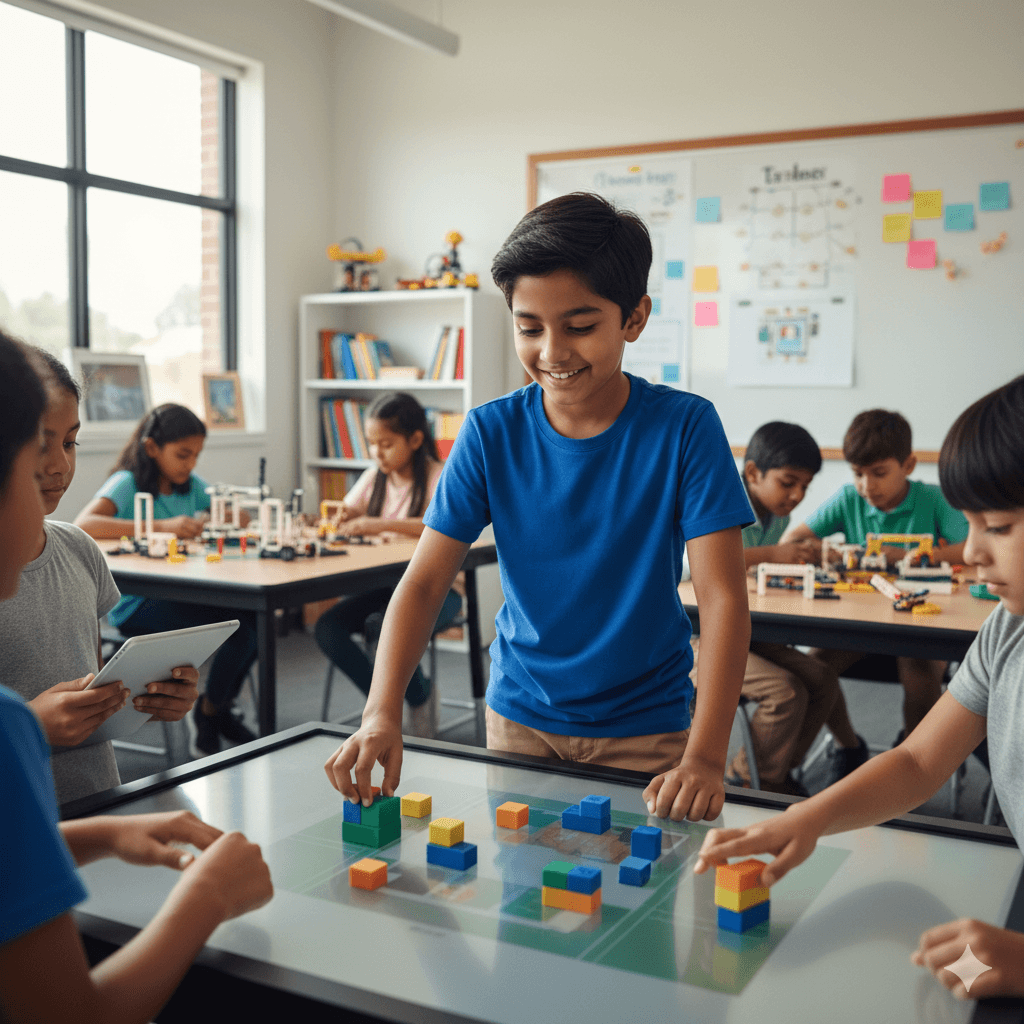
Education is gradually shifting from traditional lecture-based instruction toward more interactive learning approaches. One method gaining widespread attention is Project-Based Learning (PBL). Instead of memorizing information for exams, students work on meaningful projects that require research, collaboration, and real-world problem solving.
Project-Based Learning encourages students to actively participate in the learning process. By engaging in hands-on tasks and practical challenges, learners gain deeper understanding while developing essential skills that extend beyond the classroom.
What Is Project-Based Learning?
Project-Based Learning is a teaching method in which students gain knowledge and skills by working on extended projects that address real-world problems or questions.
Rather than simply listening to lectures, students investigate topics, design solutions, and present their findings.
Typical characteristics of PBL include:
- A central question or challenge
- Student collaboration in groups
- Research and critical thinking
- Hands-on activities
- Presentation of final results
This approach shifts the focus from passive learning to active exploration and problem-solving.
Encourages Deeper Understanding
One of the major advantages of Project-Based Learning is that it helps students develop a stronger understanding of academic concepts.
Instead of memorizing facts temporarily, students apply knowledge in practical situations. This process strengthens comprehension and improves long-term retention.
For example, when students design a science experiment or build a model, they must fully understand the concepts involved rather than simply recalling information from textbooks.
Develops Critical Thinking Skills
Project-Based Learning challenges students to analyze information, evaluate ideas, and solve complex problems.
During projects, students often need to:
- Research multiple sources
- Identify patterns or connections
- Compare possible solutions
- Justify their conclusions
These activities build critical thinking abilities that are valuable in both academic and professional environments.
Strengthens Collaboration and Teamwork
Many PBL activities involve group work, where students collaborate to achieve a shared goal.
Through teamwork, students learn how to:
- Communicate ideas effectively
- Listen to different perspectives
- Divide responsibilities
- Resolve disagreements constructively
These collaboration skills are essential for future careers, where teamwork is often required to complete complex tasks.
Improves Communication Skills
Project-Based Learning frequently requires students to present their findings to classmates, teachers, or external audiences.
This process improves communication skills by encouraging students to:
- Organize ideas clearly
- Speak confidently in front of others
- Use visual aids or presentations
- Answer questions about their work
Strong communication abilities are critical for academic success and professional growth.
Encourages Creativity and Innovation
Projects often allow students to approach problems in creative ways. Instead of following a single correct answer, learners can experiment with new ideas and solutions.
For instance, students may:
- Design prototypes
- Create multimedia presentations
- Develop community solutions
- Produce original research
Creative exploration helps students become more innovative and adaptable thinkers.
Connects Learning to Real-World Applications
Project-Based Learning helps students understand how classroom knowledge applies to real-life situations.
By working on real-world challenges, students see the practical value of subjects such as science, mathematics, history, and technology.
Examples of real-world projects include:
- Designing sustainable environmental solutions
- Creating business plans
- Developing community improvement initiatives
- Conducting scientific investigations
This connection between theory and practice increases student motivation and engagement.
Builds Independent Learning Skills
PBL encourages students to take greater responsibility for their learning.
Instead of relying solely on teachers for information, students learn how to:
- Conduct independent research
- Manage project timelines
- Set learning goals
- Evaluate their own progress
These skills promote lifelong learning and self-motivation.
Challenges of Project-Based Learning
While Project-Based Learning offers many benefits, it also requires careful planning and support.
Time Management
Projects can take longer than traditional lessons, requiring teachers to balance curriculum requirements with project activities.
Assessment Difficulties
Evaluating student performance in group projects can be complex, as teachers must assess both individual contributions and overall outcomes.
Resource Requirements
Some projects may require additional materials, technology, or space that not all schools can easily provide.
Despite these challenges, many educators find that the benefits outweigh the difficulties when PBL is implemented effectively.
The Future of Project-Based Learning
As education systems evolve, Project-Based Learning is becoming increasingly popular. Schools are recognizing the importance of preparing students for real-world challenges rather than focusing solely on standardized testing.
Future classrooms may integrate PBL with technologies such as:
- Digital collaboration platforms
- Virtual simulations
- Interactive learning tools
- Global project partnerships
These innovations can expand opportunities for students to explore ideas and work on meaningful projects.
Conclusion
Project-Based Learning transforms education by shifting the focus from memorization to active exploration and problem-solving. Through hands-on projects, students develop deeper understanding, stronger collaboration skills, and greater creativity.
By connecting academic concepts to real-world applications, PBL prepares students for future challenges in education, careers, and everyday life. As schools continue to adopt more interactive learning approaches, Project-Based Learning is likely to play an increasingly important role in modern education.
FAQ: Project-Based Learning
1. How is Project-Based Learning different from traditional teaching?
Traditional teaching often focuses on lectures and memorization, while Project-Based Learning emphasizes hands-on activities and problem-solving.
2. What age groups benefit from Project-Based Learning?
PBL can be used at all education levels, from elementary schools to universities and professional training programs.
3. How do teachers choose suitable projects for students?
Teachers usually select projects that align with curriculum goals while also addressing real-world problems or meaningful topics.
4. Can Project-Based Learning improve student motivation?
Yes. Students often feel more engaged when working on practical tasks that allow them to explore their interests and creativity.
5. What role does the teacher play in Project-Based Learning?
Teachers act as facilitators who guide students, provide resources, and help them stay focused on learning objectives.
6. How are students assessed in Project-Based Learning?
Assessment may include presentations, project reports, peer evaluations, and teacher observations.
7. Can Project-Based Learning be used in online education?
Yes. Digital tools allow students to collaborate remotely, share research, and present projects in virtual learning environments.

Comments are closed.